China’s facial serum market reflects a wider shift toward targeted, ingredient-led skincare. Euromonitor International’s Beauty and Personal Care in China 2024 report describes China as one of the world’s largest beauty markets, with consumers increasingly seeking products that address specific concerns. Hydration, brightening, barrier repair, oil control, and visible aging remain common priorities.
This guide examines 10 facial serum types widely seen in China, including hyaluronic acid, vitamin C, niacinamide, retinol, peptide, ceramide, salicylic acid, tranexamic acid, green tea, and probiotic-inspired formulas. The categories are not perfectly separate. One bottle may combine several active ingredients, which can confuse even careful shoppers.
Ingredient lists matter more than attractive claims. Dermatology guidance commonly recommends checking concentration, fragrance, irritation potential, and compatibility with existing products. Patch testing remains sensible, especially for retinoids and exfoliating acids. Small steps help.
A 2023 report from Grand View Research identified facial serum as a growing global skincare category, supported by demand for concentrated, specialized formulas. However, market growth does not prove that every serum works for every person. Evidence varies by ingredient, formulation, and user consistency.
The practical question is often “when should i apply facial serum?” In most routines, apply it after cleansing and toning, but before moisturizer. Use water-based serums on slightly damp skin when suitable. Apply vitamin C in the morning with sunscreen, while retinol is usually reserved for nighttime. These are useful guidelines, not rigid laws. Skin can react unexpectedly. Product instructions and professional advice should take priority.
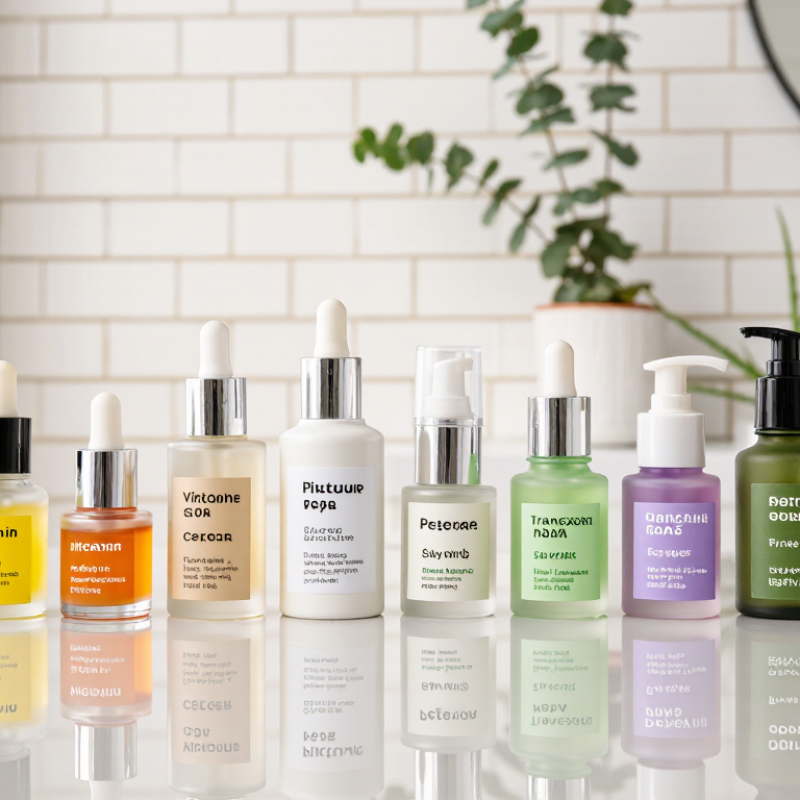
China’s Top 10 Facial Serum Types Classified by Active Ingredient and Skin Concern
China’s top ten facial serum types are best classified by active ingredient and skin concern, not popularity alone. They include hyaluronic acid for dehydration, niacinamide for excess oil, vitamin C for dullness, and retinol for visible lines. Salicylic acid suits clogged pores, while azelaic acid may calm blemish-prone skin. Alpha-arbutin and tranexamic acid target uneven tone. Peptides support a firmer-looking texture, and ceramides help strengthen a dry, stressed barrier. Needs differ.
Grand View Research valued the global facial serum market at about US$5.9 billion in 2023, with continued growth projected through 2030. Euromonitor International’s 2024 beauty analysis also identifies China as a major skincare market, where ingredient-led product searches strongly influence purchasing. These reports show demand, not guaranteed results. A serum still needs suitable concentration, stable packaging, and realistic expectations. My practical rule is simple: apply serum after cleansing, on slightly damp skin, then use moisturizer. Use vitamin C in the morning with sunscreen. Apply retinol at night, two or three times weekly. Results can be slow.
Tips: Patch-test one area for 24 hours. Introduce one active at a time. Avoid pairing retinol with strong exfoliating acids at first. I have found that “more actives” often means more redness, not better skin. Sensitive users should reduce frequency and seek professional advice when irritation persists. Also, “top ten” is not a medical ranking; skin behavior matters more than a sales chart.
Serum Formulation Data: pH 4.5–6.5, Active Concentrations, and Texture
Facial serums work best when their formula matches the skin’s needs and tolerance. Common types include hydrating, brightening, antioxidant, exfoliating, soothing, and anti-aging serums. Apply serum after cleansing and light toning, while the skin remains slightly damp. Follow with moisturizer. Use sunscreen every morning.
Formulation details matter more than attractive claims. Most facial serums sit between pH 4.5 and 6.5, supporting comfort and ingredient stability. Vitamin C formulas may use stronger acidic conditions, while niacinamide often performs well near skin-friendly pH levels. Typical concentrations vary widely: niacinamide often ranges from 2% to 5%, while hyaluronic acid may stay below 1%. Retinoid formulas usually need careful evening use. Texture also guides application. Watery serums absorb quickly, while gel or oil-based formulas need more drying time. These figures are useful, not sacred. I once assumed a higher percentage meant better results, but my skin disagreed.
Tips: Apply one to three drops, not a full pipette. Wait briefly between layered products. Patch test new formulas on a small area. Use exfoliating serums at night, especially when skin feels sensitive. If stinging persists, reduce frequency or stop. Product labels and professional advice remain important, because formulation quality depends on more than pH and concentration.
When to Apply Serum: Morning, Evening, and Post-Cleansing Timing
Choosing among the top ten facial serum types becomes easier when timing matches the formula. Hydrating serums with hyaluronic acid, glycerin, or ceramides suit morning and evening use. Apply serum after cleansing, while skin remains slightly damp. This helps reduce moisture loss and improves comfortable spreading. Use two or three drops. More product does not mean better results.
Morning routines can include antioxidant, vitamin C, niacinamide, or brightening serums. Apply them after cleansing and before moisturizer. Finish with broad-spectrum sunscreen, especially when using exfoliating ingredients. I have found that waiting about one minute between layers reduces pilling. It is a small detail. Some skin still reacts unpredictably.
Evening is suitable for peptide, calming, and retinol serums. Retinol should be used on clean, completely dry skin to limit irritation. Start two nights weekly, then increase slowly if your skin remains comfortable. Exfoliating acid serums also belong in the evening, but avoid pairing them with retinol at first. Patch testing helps, although it cannot predict every reaction. Redness, burning, or persistent peeling means the routine needs adjustment. A simple cleanser, serum, and moisturizer may work better than a crowded shelf.
Serum Layering by Molecular Weight, Absorption Rate, and Product Function
China Top 10 Facial Serum Types: When Should I Apply Serum?
Serum layering works best when based on molecular weight, absorption rate, and product function. Start with watery formulas, such as hydrating serums containing glycerin, hyaluronic acid, or panthenol. Their smaller dissolved ingredients spread quickly across damp skin. Follow with lightweight antioxidant or brightening formulas. However, molecular weight is not the whole story. The International Journal of Cosmetic Science notes that vehicle, pH, concentration, and skin condition also influence ingredient delivery.
Use treatment serums after hydration, but separate potentially irritating actives when needed. Apply vitamin C in the morning, then moisturizer and broad-spectrum sunscreen. Use retinoid or exfoliating acid serums at night, preferably on dry skin. Barrier-supporting formulas containing ceramides, cholesterol, or fatty acids can follow water-based products. Finish with an emulsion or cream to reduce water loss. Thin to thick is practical, not absolute.
Industry demand supports this layered approach. Grand View Research’s 2024 facial serum report projects continued global market growth through 2030, driven partly by targeted skincare products. In China, consumers increasingly compare function-specific formulas, including hydration, brightening, firming, soothing, and oil control. Yet more layers do not guarantee better results. My own testing experience suggests that pilling often comes from excess product, rapid rubbing, or incompatible textures. Leave about 30–60 seconds between layers. Patch testing remains sensible, especially with acids and retinoids. Still, skin response should guide the routine. A perfect order does not exist.
China’s Cosmetic Safety Standards for Serum Claims, Ingredients, and Usage
China Top 10 Facial Serum Types: When Should I Apply Serum?
China’s facial serum market includes hydrating, brightening, antioxidant, soothing, firming, anti-wrinkle, oil-control, barrier-repair, exfoliating, and eye-area formulas. The National Bureau of Statistics reported approximately RMB 435.5 billion in cosmetics retail sales in China during 2024. This scale increases the need for clear, evidence-based claims. However, market size does not prove product effectiveness.
Under China’s Cosmetic Supervision and Administration Regulation, serum claims must match their declared function and supporting evidence. The NMPA’s claim-evaluation rules require responsible companies to publish supporting summaries for efficacy claims. Ingredients should also follow China’s approved ingredient catalogues and safety-assessment requirements. A brightening serum cannot simply promise “flawless skin.” Its wording should describe measurable, realistic benefits, such as improving the appearance of uneven tone.
Apply serum after cleansing and before moisturizer, usually morning or evening. Use sunscreen during daytime routines. Exfoliating or retinoid-style formulas require greater caution and clear frequency guidance.
A consumer may apply three drops to dry cheeks, wait briefly, then seal with moisturizer. Simple instructions matter.
Euromonitor International’s China beauty research continues to identify skincare as a major category, yet consumer expectations are becoming more demanding. Some claims still sound stronger than their evidence. That deserves reflection. Product labels should explain testing conditions, suitable skin types, warnings, and storage clearly. Safety is not a decorative sentence.
Conclusion
China’s top 10 facial serum types can be classified by their primary active ingredients and skin concerns, including hydration, brightening, antioxidant protection, oil control, soothing, and firming. This overview also explains key formulation factors such as a skin-friendly pH range of 4.5–6.5, suitable active concentrations, and texture choices ranging from lightweight watery fluids to richer gel-serum formats. These details help readers select products according to skin condition, tolerance, and daily skincare needs.
A practical guide to when should i apply facial serum focuses on applying it after cleansing and before moisturizer, with morning or evening use determined by the formula and intended function. Serum layering should generally consider molecular weight, absorption speed, and product purpose, moving from lighter textures to more substantial ones. The article also highlights China’s cosmetic safety requirements for ingredient presentation, usage directions, and product claims, encouraging accurate communication and responsible application without making unsupported promises.
 NeoKis Beauty
