A serum and a moisturizer may sit side by side on your bathroom shelf, yet they do different jobs. If you have wondered, “what is the difference between serum and moisturizer,” the practical answer begins with texture and purpose. Serums are often lighter and designed to deliver concentrated ingredients for concerns such as uneven tone or fine lines. Moisturizers help reduce water loss and support the skin barrier. The labels matter, but so do your skin’s needs.
Board-certified dermatologist Dr. Hadley King describes the distinction in practical terms: serums target specific concerns, while moisturizers hydrate and help support the skin barrier. That is a useful guide, not a strict rule. Formulas vary, and some products can do both. A watery serum may layer easily under sunscreen; a richer cream may feel more comfortable when indoor heating leaves cheeks tight. Small details matter.
This guide compares serum and moisturizer by ingredients, texture, application order, and skin type. It also explains when using both may make sense—and when one well-chosen product may be enough. No complicated routine required. Still, skincare advice can sound more certain than real skin behaves. A product that feels light on one face may sting or pill on another. Patch testing and watching how your skin responds are sensible steps, especially when introducing active ingredients. The goal is not to buy more. It is to understand what each product can realistically do.
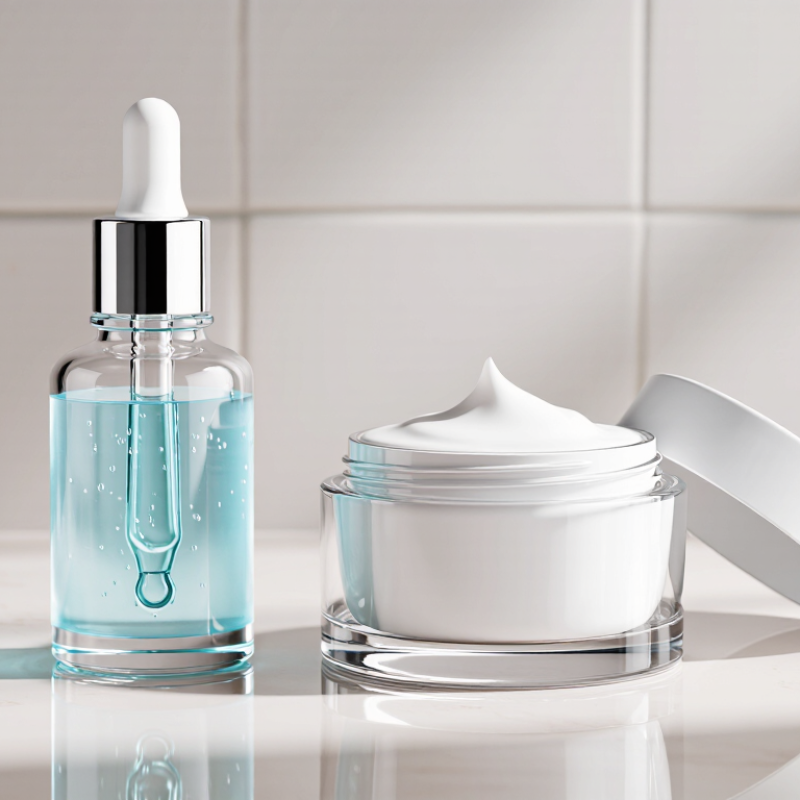
What Serums and Moisturizers Are
A serum is a lightweight skincare product designed to deliver selected ingredients to the skin’s surface. Its formula may include ingredients such as niacinamide, vitamin C, or hyaluronic acid. These ingredients address different concerns, from uneven-looking tone to dryness. “Concentrated” does not always mean stronger or better; formulas vary, and some skin may react to them. The line can blur.
A moisturizer is made to soften skin and help reduce water loss. Many formulas combine humectants, which attract water, with emollients or occlusives that smooth or help seal the surface. A Cochrane systematic review from 2017 examined 77 studies involving 6,603 people with eczema. It found some evidence that moisturizers can ease symptoms, while noting that results varied across products and studies. That evidence concerns eczema care, not every cosmetic claim. In everyday use, a serum might be applied to clean skin, followed by moisturizer. But layering is not a rule: a moisturizer alone may be enough, and a serum can sometimes feel sticky or irritate. Check how your skin responds.
How Their Formulas and Ingredients Differ
A serum usually has a lighter vehicle, such as water or a thin gel, and is designed to spread a concentrated set of ingredients in a small amount. A moisturizer is built more often around humectants, emollients, and occlusive ingredients. Glycerin attracts water; fatty alcohols soften rough patches; petrolatum can slow water loss. The split is not absolute. Some serums contain oils, and some moisturizers deliver active ingredients.
Formulation choices matter more than the word “serum” on the label. Grand View Research estimated the global skin-care products market at USD 115.65 billion in 2022, with projected growth through 2030. That market figure describes demand, not proof that one texture works better. Check the ingredient list and how your skin responds. For example, a watery serum may layer comfortably under sunscreen, while a cream can feel more protective on dry cheeks in cold weather. Small details count.
Look for familiar humectants, barrier-supporting lipids, and a texture you can use consistently. Fragrance or multiple active ingredients may irritate some people, though not everyone reacts the same way. Patch testing helps. I’d avoid assuming a higher ingredient percentage means better results; formulation, stability, and skin tolerance also shape performance. Even a well-designed product can feel wrong on a humid afternoon.
2026 Top: Serum vs. Moisturizer — How Their Formulas and Ingredients Differ
Serums are often lightweight formulas focused on delivering targeted ingredients, while moisturizers typically emphasize hydration and reducing water loss with emollients or occlusives. Scores show general formulation tendencies on a 1–5 scale, not measured data or rules for every product. Both categories can contain humectants and active ingredients.
How Serums and Moisturizers Affect the Skin
A serum and a moisturizer affect skin in different ways, though their roles can overlap. Serums are often lightweight and designed to deliver ingredients such as glycerin or niacinamide across the skin’s surface. Their effects depend on the formula, not just the word “serum” on the bottle. Some support hydration; others target uneven tone or the look of fine lines. More concentrated does not always mean better. Sensitive skin may react to a product that works well for someone else.
Tips: Apply products to clean skin, following the directions on the label. If your skin is sensitive, test a small area first. Add one new product at a time. Keep it simple.
Moisturizers help reduce water loss and support the skin barrier, which can leave skin feeling softer and less tight. Creams are often richer than lotions, but texture alone does not tell you how well a product will suit you. A serum may add hydration, while a moisturizer helps hold it in; some products do both. Skin needs also shift with weather, age, and routine. It is easy to expect quick results, but that expectation may be unrealistic. Irritation, persistent dryness, or worsening skin concerns are reasons to stop and seek advice from a qualified clinician.
When to Use Each Product and in What Order
A serum is usually a lightweight step for delivering ingredients such as humectants or antioxidants. Moisturizer is typically richer and helps reduce water loss, leaving skin feeling softer. The textures can overlap, though, so labels and personal comfort matter more than a rigid rule.
After cleansing, apply serum to clean skin, following its directions. Use a few drops and spread them gently across your face; avoid rubbing hard. Not always. Some formulas work best on damp skin, while others may feel more comfortable on dry skin. Give it a short moment to settle, especially if it feels tacky. Then smooth moisturizer over your face and neck. This helps seal in hydration and can make the routine feel less tight.
In the morning, finish with sunscreen as the final skincare step before makeup. At night, moisturizer can follow serum without sunscreen. If you use several serums, avoid piling on every active ingredient at once; irritation can make a careful routine harder to maintain. Keep it simple. Patch-test unfamiliar products and introduce them gradually, especially if your skin is sensitive. I’d adjust the order if a product’s instructions say otherwise, because formulas do not all behave alike. A brief wait is useful, but there is no need to let each layer dry completely if that makes your skin uncomfortable.
How to Choose Based on Skin Type and Needs
A serum and a moisturizer serve different jobs, so choosing between them starts with your skin’s needs. Serums are usually lightweight and deliver selected ingredients to address concerns such as dehydration or uneven tone. Moisturizers help soften skin and reduce moisture loss. Think of a serum as a targeted step and moisturizer as everyday support. They are not always interchangeable.
For oily or combination skin, a light, non-comedogenic gel moisturizer may feel more comfortable than a rich cream. Dry skin often prefers a thicker moisturizer, especially after bathing. If your main concern is tightness, a hydrating serum may help, but it usually cannot replace moisturizer. Sensitive skin may do better with a simple routine and fewer active ingredients. Patch-test new products, and stop using one if it causes persistent irritation. Skin changes with weather, age, and habits; one routine may not work forever.
Tips:
Apply products to clean skin, following each product’s directions. If layering, use the thinner serum before moisturizer. Add one new product at a time, so reactions are easier to identify. Keep notes for a week or two. It may feel fussy, but it can reveal what actually suits your skin.
Conclusion
Serums and moisturizers both support healthy-looking skin, but they serve different purposes. If you’re wondering what is the difference between serum and moisturizer, the main distinction lies in their texture, formulation, and role: serums are usually lightweight and designed to deliver selected ingredients, while moisturizers are made to hydrate and help reduce moisture loss. Their ingredient blends can vary, so the best choice depends on your skin’s needs and how it responds.
In a simple skincare routine, apply serum after cleansing and before moisturizer, following the product directions. Choose a serum to address a specific concern, such as dryness or uneven-looking tone, and use a moisturizer to provide lasting comfort and hydration. People with oily, dry, sensitive, or combination skin may prefer different textures and formulas. You may use one or both products; consider your skin’s condition, introduce new products gradually, and adjust your routine if irritation occurs.

 NeoKis Beauty